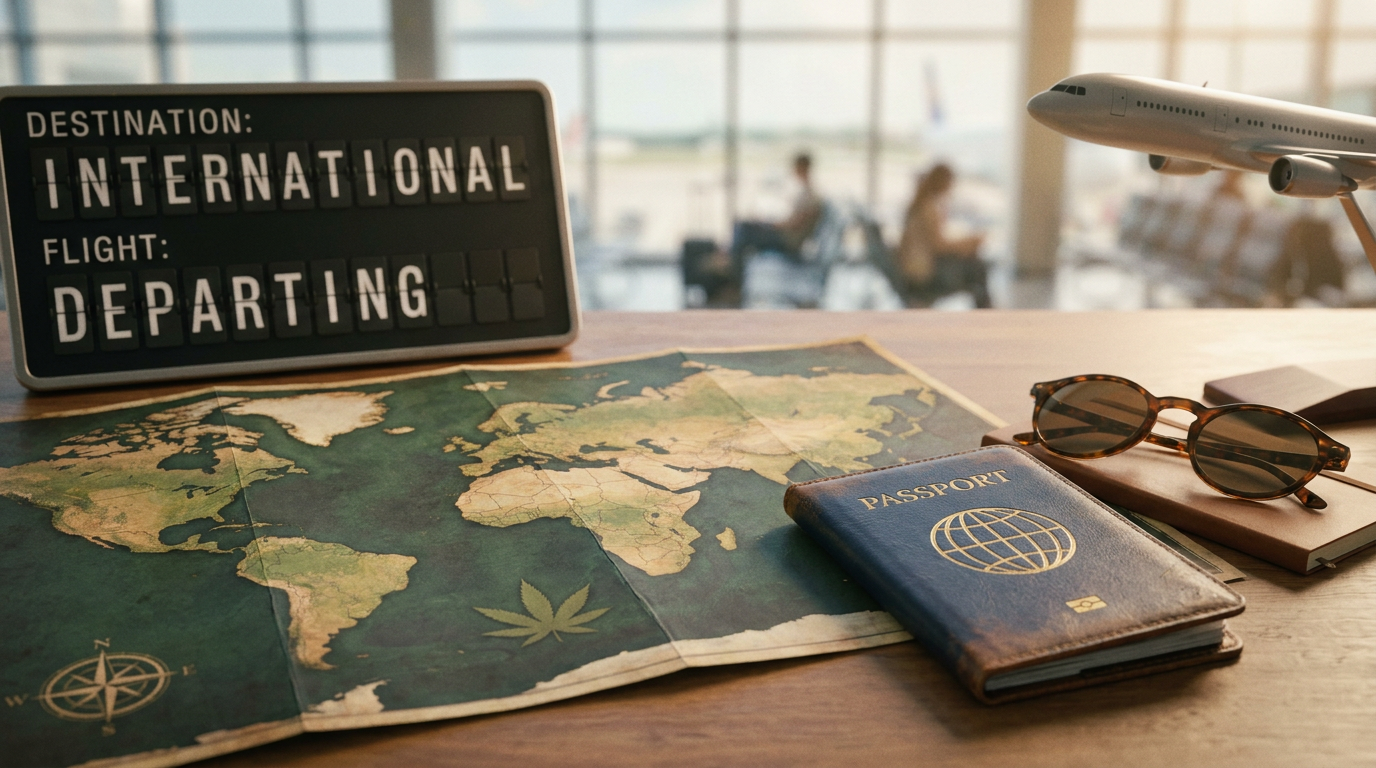
Marijuana laws differ significantly across the world, fwith countries taking different approaches to recreational use, medical cannabis, personal possession, and commercial sales. While some jurisdictions allow regulated adult use, others permit limited possession or medical access while maintaining restrictions on recreational activities.
For travelers, international students, business professionals, and people interested in drug policy, understanding these differences is essential. A country may permit certain cannabis activities without allowing unrestricted sales, and a law that applies in one region may not apply elsewhere.
This guide explores marijuana laws across Europe, Asia, and North America, explaining the main legal differences and highlighting important considerations for anyone researching the subject.
Understanding the Difference Between Legalization and Decriminalization
Before comparing individual countries, it is important to understand several common legal terms.
Legalization means certain activities involving marijuana are permitted under a defined legal framework. This may include regulated sales, possession, or home cultivation, subject to specific conditions.
Decriminalization means certain conduct, such as possessing a small quantity for personal use, is treated differently from a criminal offense. It does not necessarily make the activity legal, and administrative penalties may still apply.
Medical cannabis refers to cannabis products permitted for specified medical purposes. Access may require a prescription, authorization, or participation in an approved program.
Prohibition means particular cannabis activities remain illegal, although exceptions may exist for approved medical or industrial uses.
These distinctions are especially important when comparing countries. Legal possession does not automatically mean that commercial sales or public consumption are permitted.
Marijuana Laws in Europe
Europe has a diverse legal landscape. Countries follow their own national legislation, and there is no single recreational Cannabis Laws Around the World that applies throughout the European Union.
The European Union Drugs Agency explains that national rules differ considerably regarding possession, consumption, penalties, and the treatment of minor offenses.
Germany
Germany introduced a legal framework for limited adult cannabis possession and home cultivation in 2024. The legislation also created provisions for non-commercial cultivation associations.
However, these changes did not establish unrestricted commercial recreational sales. Legal access remains subject to age requirements, quantity limits, and restrictions on where cannabis may be consumed.
Germany illustrates how a country can permit certain adult-use activities while maintaining controls over commercial distribution and public consumption.
Netherlands
The Netherlands is internationally known for its cannabis coffee shops, where small-scale sales are tolerated under specific conditions.
This system is not equivalent to unrestricted legalization. Cannabis production and supply remain subject to separate legal restrictions, and municipalities may impose additional rules on coffee shops.
Visitors should not assume that every coffee shop accepts non-residents or that consumption is permitted everywhere. Local regulations should be checked before making plans.
Portugal
Portugal decriminalized the personal possession and use of small quantities of drugs in 2001. However, decriminalization does not mean that recreational cannabis sales are legal.
Depending on the circumstances, possession may result in administrative proceedings or other consequences. Commercial supply remains subject to separate restrictions.
Portugal is therefore an important example of the difference between decriminalization and full legalization.
Spain
Spain has a complicated framework governing private consumption, possession, public use, and cannabis social clubs.
The legal position can depend on the circumstances and location. Public consumption may lead to penalties, and cannabis social clubs should not automatically be treated as ordinary licensed retail stores.
Travelers should check current national and regional rules rather than relying on general descriptions of Spanish cannabis culture.
Malta
Malta introduced reforms permitting limited adult possession, home cultivation, and access through authorized non-profit cannabis associations under specific conditions.
These provisions include restrictions on quantities, distribution, and public consumption. They do not establish unrestricted recreational sales for tourists.
Anyone researching Malta’s laws should confirm the current requirements for possession and access to authorized associations.
Marijuana Laws in Asia
Asia includes countries with very different approaches to cannabis. Some maintain tightly regulated medical programs, while others impose severe penalties for prohibited possession, use, or trafficking.
Travelers should be especially cautious about relying on older information because legislation can change, and penalties may be substantial.
Thailand
Thailand attracted international attention following major cannabis policy changes beginning in 2022. These developments contributed to the growth of cannabis-related businesses and public discussion about regulation.
However, Thailand’s rules have continued to evolve. Medical use, retail access, possession, and consumption may be governed by specific requirements.
Visitors should consult current Thai government guidance before assuming that recreational cannabis use or purchases are permitted. The presence of cannabis-related businesses does not guarantee that every activity is lawful.
Japan
Japan maintains strict controls on cannabis. Certain cannabis-related offenses can carry serious legal consequences, and visitors should not assume that products legally sold elsewhere are permitted in Japan.
Travelers should verify the rules covering possession, importation, and cannabis-derived medications before departure.
Singapore
Singapore enforces strict drug-control laws, including severe penalties for certain cannabis offenses. Importation, possession, consumption, and trafficking are subject to stringent restrictions.
Visitors should never assume that cannabis products permitted in another country can be brought into Singapore. Even products marketed as medical or wellness items require careful legal verification.
India
India’s legal framework distinguishes between different cannabis preparations and uses. Certain traditional preparations are treated differently under national law, while activities involving cannabis resin and flowering tops are subject to significant restrictions.
State-level rules can also affect the legal position of particular products and activities.
Travelers should not assume that cultural familiarity with cannabis in some areas makes recreational possession or purchasing lawful. Current national and state requirements should be checked carefully.
Marijuana Laws in North America
North America includes some of the world’s most developed regulated cannabis markets, but laws remain different between countries and jurisdictions.
Canada
Canada legalized recreational cannabis nationally in 2018. Adults can access regulated products subject to federal requirements and additional provincial or territorial rules.
Minimum legal ages, retail arrangements, possession limits, and consumption restrictions vary across the country.
International transportation remains an important restriction: cannabis cannot legally be carried across Canada’s international borders unless specific legal authorization applies.
United States
The United States has a complex legal structure because state laws differ from federal law. Many states permit adult recreational cannabis use, while others allow medical cannabis or maintain broader prohibitions.
California, Colorado, and New York are examples of states with regulated adult-use markets. However, cannabis remains illegal under federal law, and local restrictions continue to apply.
Visitors should check the laws of the specific state and city they plan to visit. Legal purchasing in one state does not automatically authorize transportation across state lines.
Mexico
Mexico has experienced significant judicial and legislative developments concerning personal cannabis use. However, these developments have not created an unrestricted nationwide commercial recreational market equivalent to Canada’s.
The legal treatment of possession, cultivation, purchasing, and supply can differ according to the circumstances.
Visitors should consult current Mexican government guidance and avoid assuming that personal-use protections automatically permit commercial purchases or public consumption.
Key Factors That Influence Marijuana Laws
Although every country has its own legislation, several common factors influence how marijuana is regulated.
Medical and Recreational Use
Some countries permit cannabis for specific medical purposes while prohibiting recreational use. Medical access may require an approved prescription, specialist authorization, or participation in a regulated program.
Recreational regulations are different and may involve age limits, possession restrictions, and licensed retail systems.
Personal Possession and Commercial Sales
A country may treat possession of a small amount differently from commercial distribution. Decriminalization may reduce criminal penalties for personal possession without authorizing the sale or production of cannabis.
Understanding this distinction helps prevent misunderstandings about a country’s legal position.
Local and Regional Restrictions
National legislation does not always tell the complete story. States, provinces, territories, and municipalities may establish additional rules governing where cannabis can be purchased, possessed, or consumed.
Travelers should research the specific area they intend to visit rather than relying on a country’s general reputation.
Important Considerations for International Travelers
Anyone traveling internationally should take particular care when researching marijuana laws.
Check official government guidance. Laws can change, so confirm the current requirements before departure.
Understand border restrictions. Cannabis cannot automatically be transported between countries, even when both permit certain forms of use. Medical cannabis products may also require specific documentation or authorization.
Review accommodation policies. Hotels and rental properties may prohibit smoking or cannabis consumption regardless of the local legal framework.
Avoid driving while impaired. Cannabis can affect concentration, coordination, reaction time, and judgment.
Do not assume medical authorization is universal. A prescription issued in one country may not be recognized in another.
Respect local customs. Cultural acceptance varies, and permitted activities may still be inappropriate in certain public or private settings.
Following these precautions can help travelers understand their responsibilities and reduce the risk of legal complications.
The Future of Marijuana Regulation
Marijuana legislation continues to evolve as governments evaluate public health, criminal justice, medical research, taxation, and consumer protection.
Some jurisdictions have introduced regulated markets or relaxed penalties for personal possession. Others continue to emphasize prohibition or restrict access to approved medical uses.
Future policy developments may involve new licensing systems, changes to possession limits, expanded medical programs, or revised rules concerning cultivation and retail sales. However, the direction and timing of these changes will differ between countries.
For readers following this subject, checking current legislation is more useful than assuming that one country’s policy will eventually be adopted everywhere.
Conclusion
Understanding marijuana laws in Europe, Asia, and North America requires looking beyond simple labels such as legal, illegal, or decriminalized. Germany permits certain adult-use activities under specific conditions, the Netherlands tolerates limited coffee shop sales, Canada has a nationally regulated recreational market, and the United States maintains a complex relationship between federal and state law. Meanwhile, several Asian countries enforce strict cannabis restrictions.
The most important lesson is that each jurisdiction has its own rules concerning possession, medical access, commercial sales, and consumption.
Whether researching international policy or planning a trip, always verify current legislation through official government sources. Understanding the difference between legalization and decriminalization, respecting local requirements, and avoiding unauthorized cross-border transportation are essential steps toward making informed decisions.